We work to promote sustainable
food and nutrition security
OUR FOCUS AREAS
Finding Solutions Together
Nutrition & WASH
Regenerative Agriculture
Equitable Livelihoods
Civil Society Empowerment
Nutrition Education and Eco-Literacy
102nd
position out of 117 countries under the Global Hunger Index (GHI) 2019
7.4M
children are estimated to have low birth weights in India
70%
children aged 6- 59 months are anemic in India
According to the GHI 2019, India’s hunger level is ranked as ‘Serious’. The country scores 102nd of 117 countries with a higher hunger level than Bangladesh, Nepal and Pakistan. India’s high ranking with a score of 30.3 draws attention to the country’s stubbornly high proportions of malnourished children. India’s child wasting rate is extremely high at 21 percent (NFHS 4); it’s child stunting rate, 38.4 percent (NFHS 4), is also categorised as very high in terms of its public health significance.
Inadequate dietary diversity, communicable diseases, lack of knowledge on childcare, less access to safe drinking water, poor feeding practices, and poor hygiene and sanitation are some of direct causes of malnutrition in the country. Structural causes include poverty and debt traps, lack of access to resources as land and water, insufficient access to public services, high illiteracy rates and climate change that adversely affects food availability. To address these dimensions, Welthungerhilfe works to address all four pillars of food and nutrition security- availability, access, utilization and stability.
Our Work
Welthungerhilfe promotes a multisectoral multi-stakeholder action approach when it comes to addressing the complex, inter-generational problem of hunger and malnutrition so that the gains from one sector are not lost through the leakages from the other sectors. Nutrition security is promoted among the vulnerable populations and age groups such as women (15-49 years) and children (0- 5 years) to have access to diversified nutritious diets through nutrition education and behaviour change.
Innovative approaches are implemented to improve the key indicators related to food and nutrition security in the most vulnerable parts of the country. The objective is to ensure that basic and underlying causes (nutrition sensitive) as well as immediate causes (nutrition specific) are addressed. The focus is therefore both on food security (access and availability), and nutrition security (utilisation and stability). The approaches are based on a premise that in longer term poor people can break out from the cycle of poverty and malnutrition if adequate welfare schemes are in place and basic rights are fulfilled; such as access to proper education, access to food and income, better health services, and state-run welfare programs.
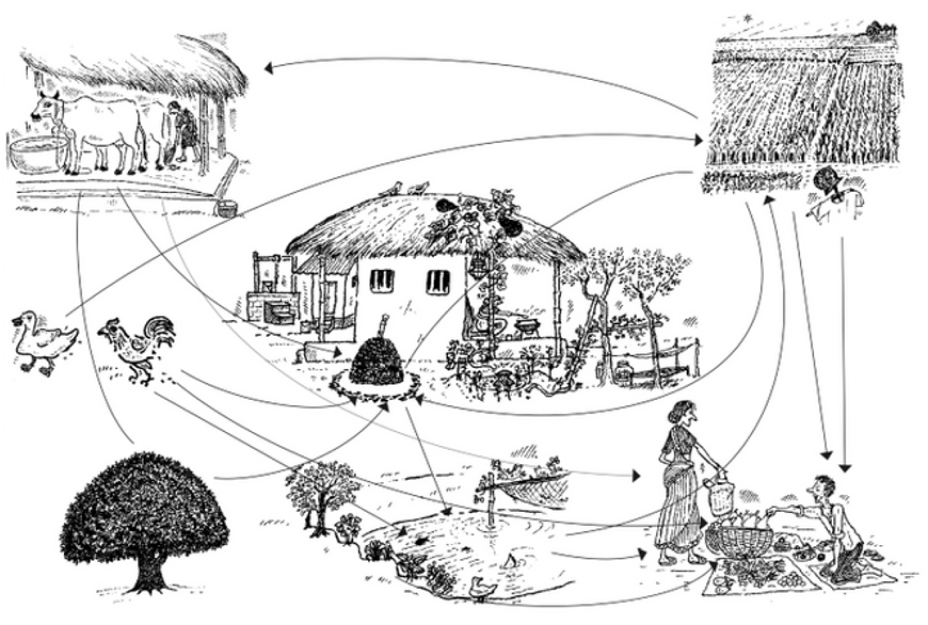
Sustainable Integrated Farming Systems (SIFS) The agroecological approach to integrate various components to achieve higher production, diet diversity and agrobiodiversity